Sistem Pneumatica

Pneumatic Valves

Pneumatic valves are the brain of any compressed air installation. They decide where the air goes, when it passes, at what pressure and in which direction. Without them an actuator never starts and a line never exhausts. Choosing them well is the difference between an installation that runs for 20 years and one that has maintenance on the phone every month.

Since 1978 Sistem Pneumatica has designed and built purely pneumatically actuated valves, compliant with European and international standards, for OEMs, automation system integrators and panel builders.

What a pneumatic valve is and how it is built

Every pneumatic valve is made of two parts working together:

  • an outer body carrying the ports through which the air passes — supply, outlet, exhaust
  • an internal moving element (spool, poppet, ball or diaphragm) which, by changing position, connects those ports to each other in different ways and with different functions

Depending on how the moving element is actuated and what function it performs, the pneumatic valves offered by Sistem Pneumatica fall into three main families.

The three functional families

Directional valves: they route air flow to one or more outlets. These are the most common — the monostable and bistable valves that drive machine cylinders. They are described as 3/2, 5/2 or 5/3 according to ports and positions.

Regulating valves: they modulate flow rate or pressure. Speed controllers belong here (we have given them a page of their own), as do pressure reducers and regulators.

Shut-off valves: they open or close a line completely. They isolate sections of an installation, make an area safe, or exhaust a pressurised volume quickly.

Within these three families, Sistem Pneumatica produces several specific lines.

Sistem pneumatic valve catalogue

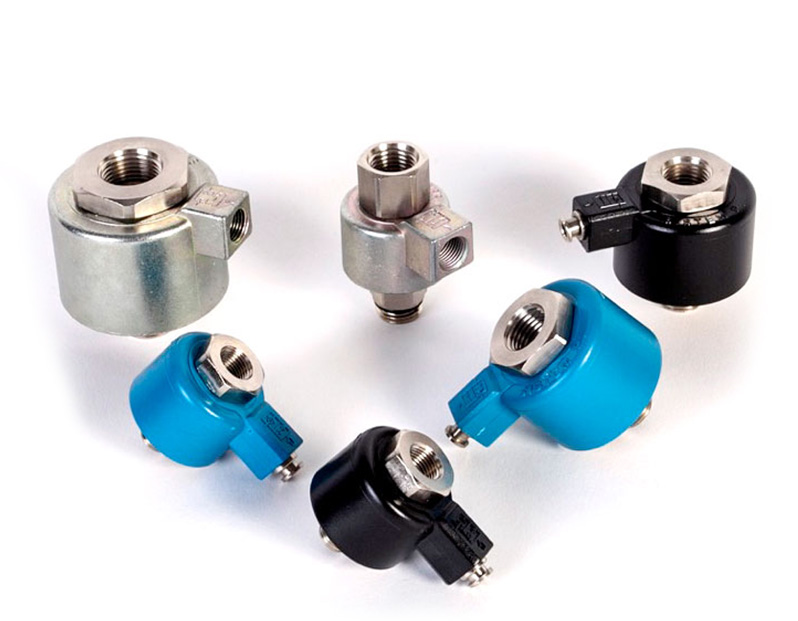
  • Pneumatic pilot valves – for driving standard cylinders, in 3/2 and 5/2 monostable and bistable configurations
  • Blocking valves – connect or separate two sections of an installation according to whether pilot air is present or absent
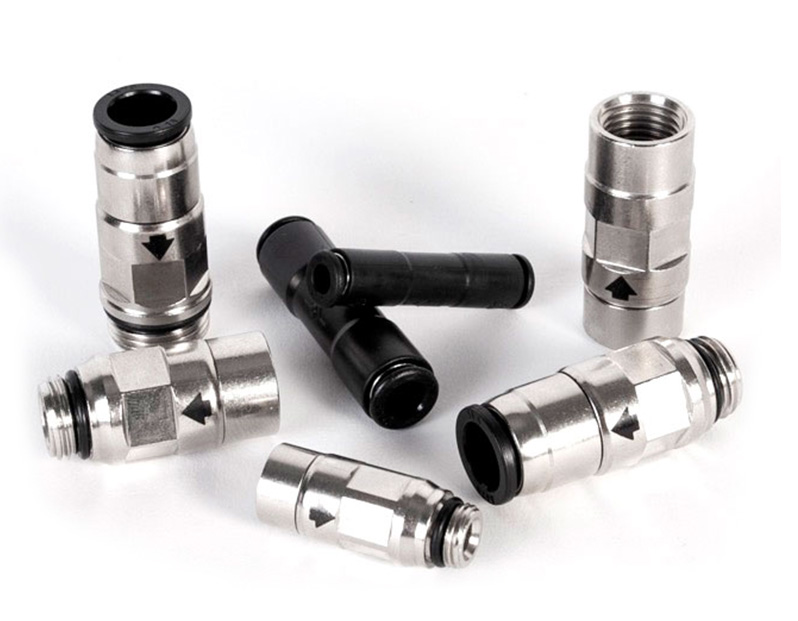
  • Check valves – allow flow in one direction only, essential to prevent air backfeeding into sensitive parts of the circuit
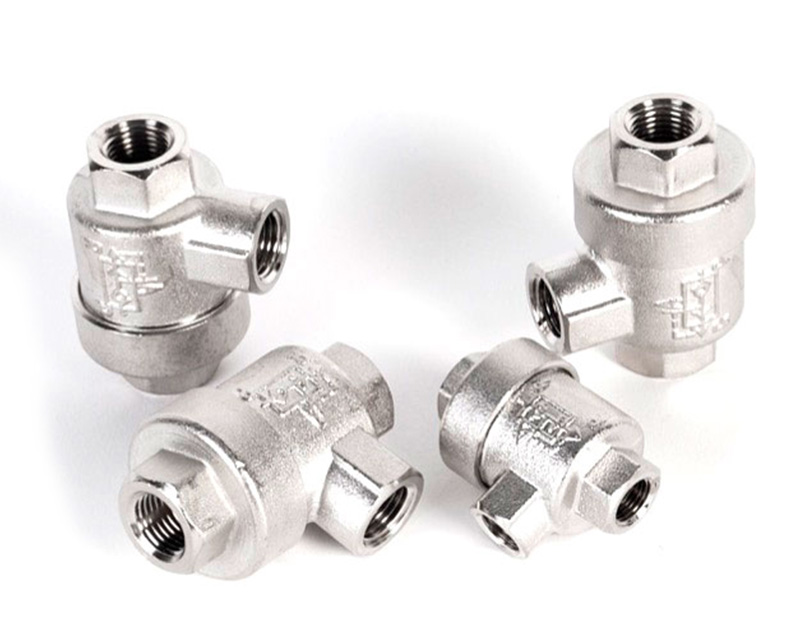
  • Quick exhaust valves – dump air downstream of a solenoid valve rapidly, cutting cylinder return times
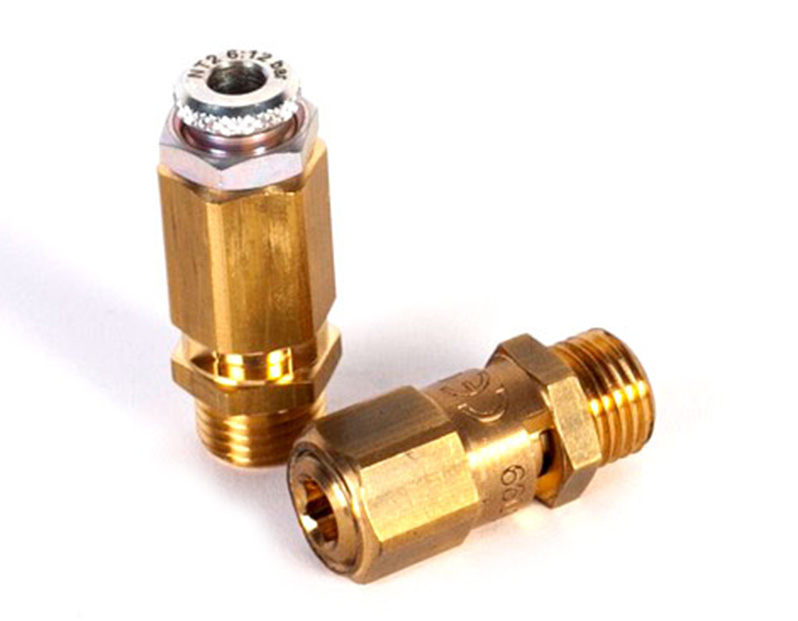
  • Safety valves – set to a trip pressure; if the network goes over the threshold they exhaust automatically to protect the installation downstream

Every series comes with its own technical data sheet and a downloadable STEP file, because mechanical design today starts from the 3D model — not from 2D views.

How to choose the right pneumatic valve

Four variables carry more weight than all the others:

  • Function: distribution, regulation or shut-off. Without clarity here you get nowhere.
  • Port and position configuration: 2/2, 3/2, 5/2, 5/3 — defined by the number of connections and stable positions.
  • Type of actuation: pneumatic (driven by an air signal), electropneumatic (solenoid valve), manual or mechanical.
  • Working pressure and medium: standard compressed air at 6–8 bar is the common case, but there are applications at higher pressures or with alternative media that call for specific materials.

There is a fifth point many people forget: air quality. A valve fed with dirty air or condensate lasts a tenth as long. Air preparation upstream is always an investment that pays for itself.

Frequently asked questions

What is the difference between a 3/2 and a 5/2 valve?

The numbers give ports and positions. A 3/2 valve has 3 connections (supply, outlet, exhaust) and 2 stable positions: it is used to drive single-acting cylinders, where the return comes from a spring. A 5/2 has 5 connections and 2 positions: it drives double-acting cylinders, where both the extend and the retract stroke are commanded by air.

When do you need a check valve in a pneumatic circuit?

Any time you want air to flow one way and not come back. There are three typical cases: protecting a receiver (so accumulated pressure doesn’t bleed away if supply upstream drops), separating network branches that must not interfere with one another, and holding an actuator in position even if the supply fails.

What does a quick exhaust valve do?

It cuts cylinder return time dramatically. Without one, the air has to travel the whole line back to the solenoid valve to be exhausted to atmosphere; with a quick exhaust valve mounted close to the cylinder, the air vents in milliseconds from the nearest point. On fast machine cycles the difference is substantial.

Are Sistem valves compatible with other manufacturers’ automation systems?

Yes. Standard threads (BSP, metric) and mechanical interfaces follow industry norms, so our valves integrate into any installation built on standard components. For more complex integrations or special threads, our engineering department handles the case directly.

How long should an industrial pneumatic valve last?

A good quality valve, fed with filtered air and running at the correct pressure, comfortably exceeds 50 million cycles. Real service life almost always comes down to air quality — not valve quality. Which is why a good air preparation unit upstream is the best investment you can make in the life of the whole circuit.

What do “monostable” and “bistable” mean?

Monostable means the valve has a single stable rest position, which it returns to automatically when the pilot signal is removed (usually by spring). Bistable means both positions are stable: the valve stays where the last signal put it until a new command arrives in the opposite direction. The choice follows the logic of the machine cycle.

Designing or upgrading a pneumatic installation? Browse the full Sistem valve catalogue, or write to our engineering department for a dedicated sizing.